Samsung Electro-Mechanics Invests US$5.1 Billion to Expand AI Chip Substrate Production
Samsung Electro-Mechanics will invest 6.78 trillion won (about US$5.1 billion) to expand semiconductor substrate production in South Korea and Vietnam, targeting rising demand for components used in...

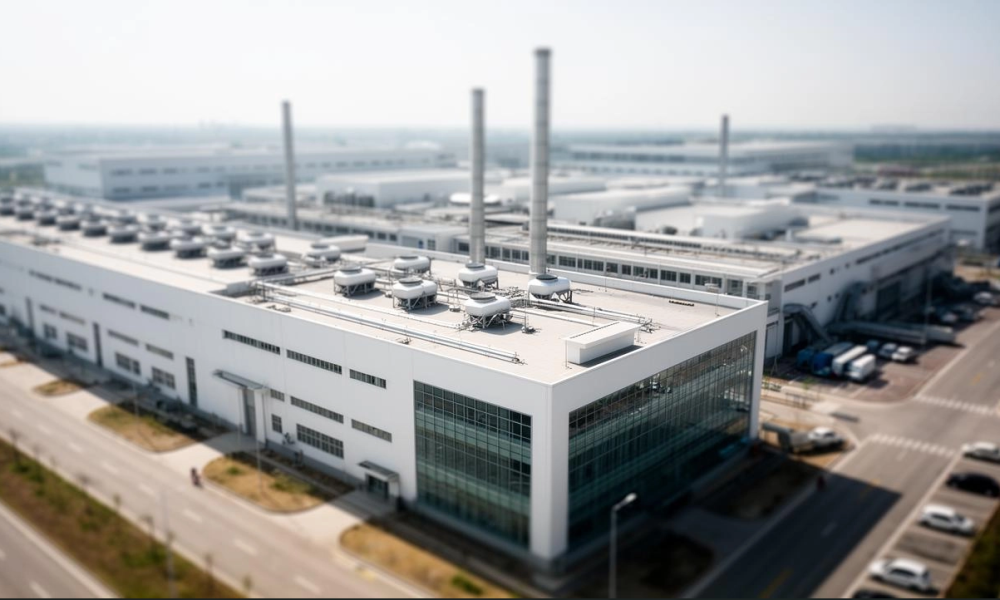
Samsung Electro-Mechanics will invest 6.78 trillion won (about US$5.1 billion) to expand semiconductor substrate production in South Korea and Vietnam, targeting rising demand for components used in AI servers and high-performance computing systems.
Quick Skim
The investment will focus on next-generation flip-chip ball grid array (FCBGA) substrates, which connect high-performance chips such as AI accelerators, GPUs and CPUs to motherboards.
Sejong Plant Receives 4.27 Trillion Won Investment
Samsung Electro-Mechanics will invest 4.27 trillion won to expand FCBGA production capacity at its Sejong plant in South Korea.
The project represents the largest single-product investment in the facility’s history.
Construction and equipment investment will run until May 2028, with new production lines expected to begin mass production in September 2028.
The Sejong facility will focus on higher-value and more technically complex substrates designed for AI servers and high-performance computing applications.
Vietnam Facility Gets 2.51 Trillion Won Expansion
The company will also invest 2.51 trillion won in its package substrate production facility in Vietnam.
The expansion will increase Samsung Electro-Mechanics’ overseas manufacturing capacity while supporting growing demand from global semiconductor customers.
By expanding production in both South Korea and Vietnam, the company is strengthening its manufacturing footprint across two major Asian electronics hubs.
AI Chips Require Larger and More Complex Substrates
FCBGA substrates provide the electrical connection between high-performance semiconductors and the motherboard.
As AI processors become more powerful, substrate design is becoming increasingly complex.
AI accelerators and high-performance processors require:
- Larger substrate sizes
- More circuit layers
- Higher signal density
- Greater power delivery capability
- More stable electrical performance
These requirements are increasing the technical barriers for substrate manufacturers and driving demand for higher-value FCBGA products.
Client Commitments Reduce Expansion Risk
Unlike some previous capacity expansions, Samsung Electro-Mechanics said part of the investment is supported by funding and long-term supply commitments from global customers.
This gives the company greater visibility over future demand before new production capacity comes online.
Securing customers earlier can also reduce the risk of building large-scale manufacturing capacity before sufficient orders are confirmed.
AI Infrastructure Boom Drives Substrate Demand
Demand for advanced semiconductor substrates is increasing alongside investment in AI servers, data centres and high-performance computing infrastructure.
As GPU and accelerator designs become larger and more complex, substrate suppliers are being pushed to deliver increasingly sophisticated products at scale.
Stable mass production and advanced manufacturing capabilities are therefore becoming important competitive factors as semiconductor companies select suppliers.
Samsung Positions FCBGA as a Growth Business
Samsung Electro-Mechanics is positioning FCBGA as one of its key growth areas as AI and high-performance computing markets expand.
The new investment will increase both domestic and overseas production capacity while concentrating the company’s South Korean operations on more advanced products.
The expansion also highlights how the AI infrastructure boom is creating demand beyond processors themselves, driving investment across the wider semiconductor supply chain including substrates, packaging, power systems and manufacturing equipment.