BYD Thailand Factory Reaches 100,000 Vehicles Amid Growing Southeast Asia EV Market
BYD's Thai plant has produced its 100,000th new energy vehicle , highlighting its role in regional EV manufacturing and evolving market competition.


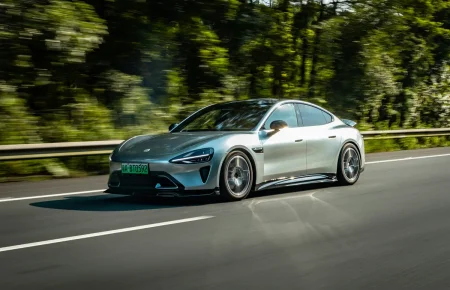
BYD’s Thailand factory marked the off-line production of its 100,000th new energy vehicle, the ATTO 3, underscoring the facility’s expanding contribution to Southeast Asia’s EV sector. This milestone reflects BYD’s efforts to strengthen local manufacturing capacity amid growing regional demand for electric vehicles.
Quick Skim
Factory Output and Market Context
Commissioned in July 2024 after about 16 months of construction, the factory has an annual capacity planned at 150,000 vehicles, covering all manufacturing stages from stamping to final assembly, including parts production. Models produced include the Dolphin, ATTO 3, and the Seal series of plug-in hybrids, all certified “Made in Thailand.”
According to data from the Thailand Board of Investment and the Department of Land Transport, registrations of battery electric vehicles in Thailand increased by 88% year-on-year in the first seven months of 2026, rising to 126,439 units. Despite market growth, BYD’s combined market share with Denza declined from 37% to 19.3% during the same period, indicating heightened competition from brands such as Chery and Geely.
Price adjustments, including up to 16% discounts on BYD’s ATTO 3, are part of the competitive response. Meanwhile, BYD maintains a stronger position in the plug-in hybrid segment, holding a 46.1% registration share in the first seven months of 2026.
Localisation and Export Expansion
BYD highlights that around 95% of the factory’s workforce are Thai nationals and local procurement accounts for approximately 50%. The company collaborates with 266 local suppliers, of which 125 operate in Thailand, supporting over 1,090 certified parts.
The factory has become an export hub, shipping more than 24,000 vehicles to regions including ASEAN, South Asia, Australia, and Europe. In the first half of 2026, exports constituted about 40% of output. Thailand’s policies incentivise export-linked production, including counting each exported vehicle as 1.5 units when meeting production requirements.
Operational Development and Workforce Training
BYD has implemented initiatives such as the “Seed Talent Program” to train Thai engineers and managers in China, enabling smoother technology transfer and local management development. Training also extends to after-sales services to ensure maintenance capabilities align with expanding EV deliveries.
According to BYD’s 2026 interim report, overseas markets now contribute over 52% of group revenue, supported by an increase of 67.8% in vehicle exports. The establishment of local R&D and operational centres, including in Europe, forms part of BYD’s broader strategy to support regional markets more effectively.
The milestone 100,000th vehicle production at the Thailand factory thus represents not only manufacturing scale but a maturing operational presence integrating local workforce, supply chains, and export functions amid a diversifying competition landscape.